A Minor Scale on Piano
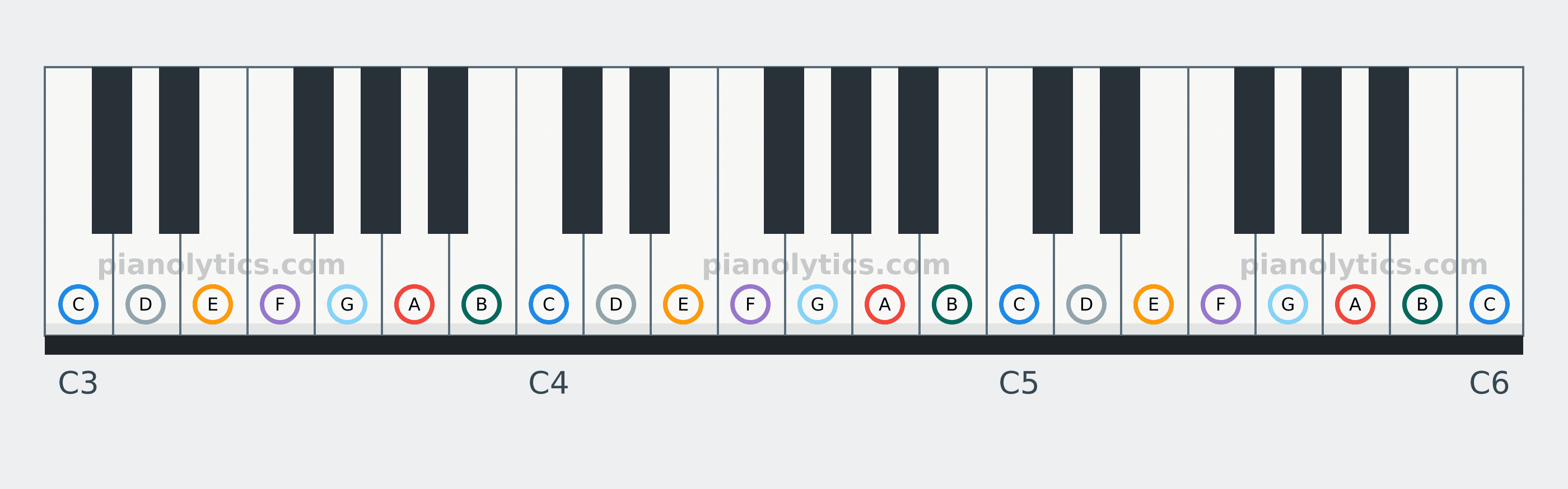
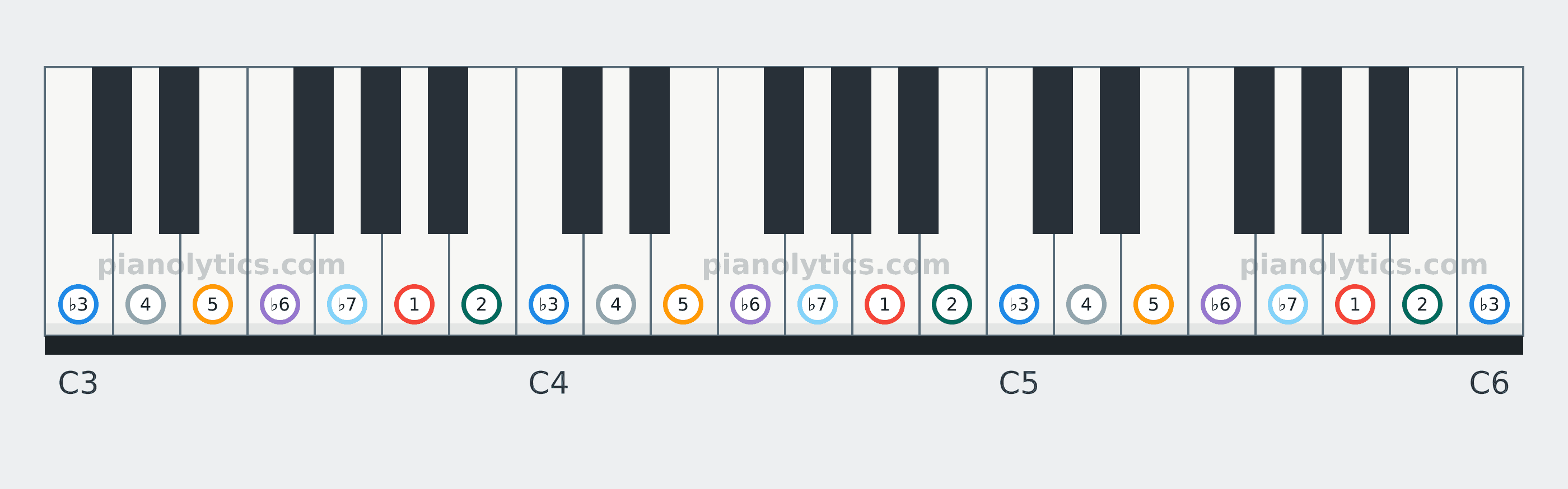
The A Minor scale contains A, B, C, D, E, F and G — 7 notes. Every one is marked across three octaves of the keyboard below, labelled with note names and with interval numbers.
- Root
- Major 2nd
- Minor 3rd
- Perfect 4th
- Perfect 5th
- Minor 6th
- Minor 7th
| Degree | 1 | 2 | ♭3 | 4 | 5 | ♭6 | ♭7 |
|---|---|---|---|---|---|---|---|
| Note | A | B | C | D | E | F | G |
| Interval | Root | Major 2nd | Minor 3rd | Perfect 4th | Perfect 5th | Minor 6th | Minor 7th |
Note names
Interval numbers
Circle of fifths
Frequently asked questions
What notes are in the A Minor scale?
A, B, C, D, E, F and G. That is 7 notes.
What is the interval pattern of the A Minor scale?
2-1-2-2-1-2-2, counting in semitones from the root: A to B is 2 semitones, B to C is 1, C to D is 2, D to E is 2, E to F is 1, F to G is 2 and G back up to A is 2.
Which chords go with the A Minor scale?
The triads built from its own notes: Am, B°, C, Dm, Em, F and G. Those are the chords that will sound consonant over it.
What is the relative major of A Minor?
C major. The two share all 7 notes — A Minor starts from the sixth degree of C major, which is why they have the same key signature.
Which smaller scales fit inside the A Minor scale?
C Major Pentatonic, D Minor Pentatonic, G Dominant Pentatonic (Mixolydian Pentatonic) and D Minor Sixth Pentatonic. Every note of those is also in the A Minor scale, so they can be played over it.
Practice this on your own piano
Pianolytics listens to your instrument and drills triads, scales and chords.